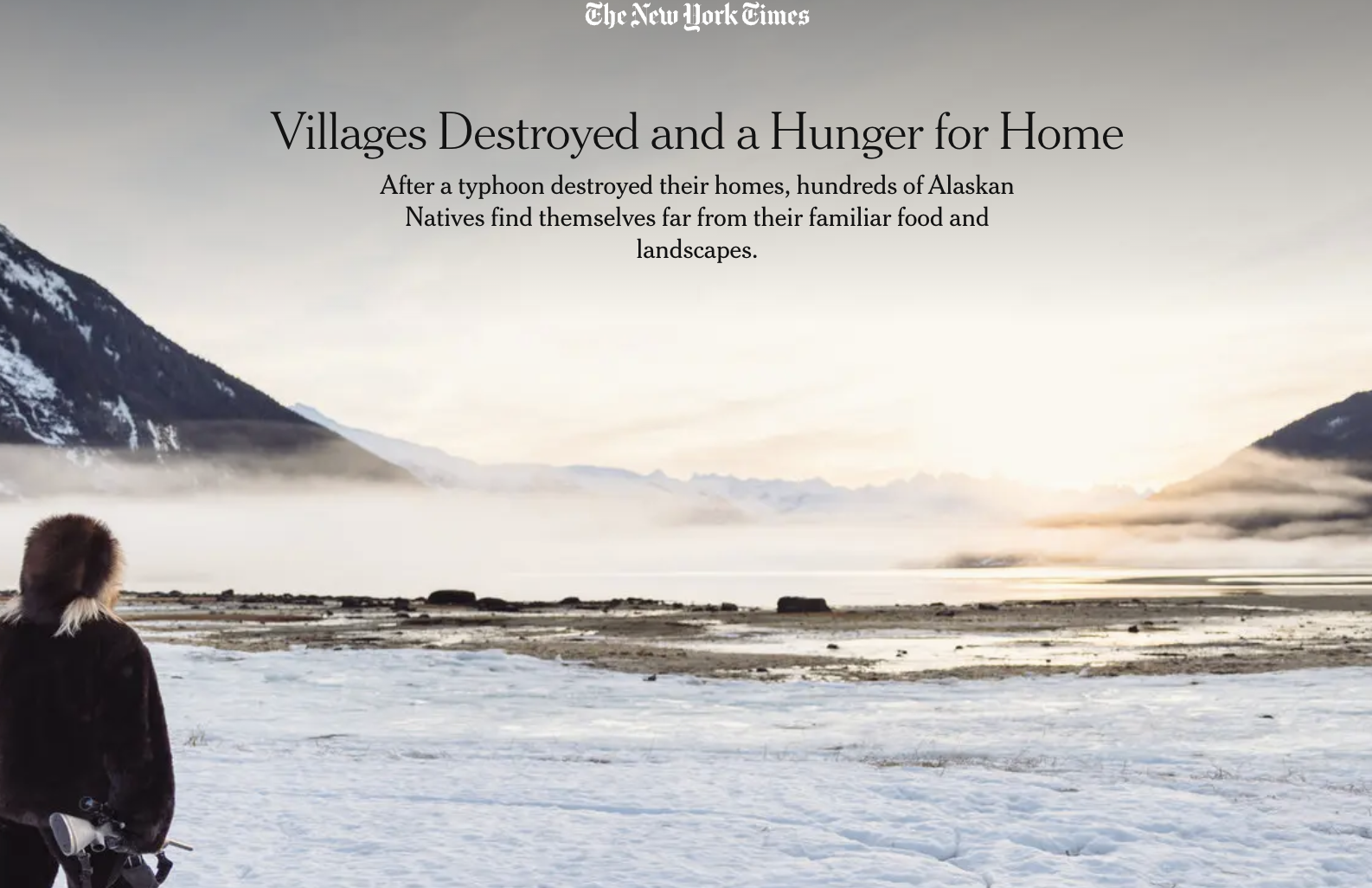
I wrote about an unprecedented, statewide effort in Alaska to help people displaced by a typhoon continue to eat Indigenous foods and how maintaining a traditional diet preserves language and culture.
Here’s how the story begins:
In October, as planeloads of evacuees from Alaska villages leveled by Typhoon Halong touched down in Anchorage, Tim Ackerman set about organizing a tribal hunting party.
They gathered their rifles and left out of the town of Haines on Alaska’s southeast panhandle, driving north along the rocky shore, scouting for sleek, dark heads breaking the smooth surface of the water.
The evacuees, the hunters knew, would soon be craving seal.
The storm hit a Yupik region 700 miles west on the Bering Sea coast, and even though Mr. Ackerman is Tlingit, he knew that Alaska Natives most everywhere took comfort in the taste of golden seal oil, rich in omega-3s and considered a medicinal soul food. It didn’t take long for him to shoot a 150-pound harbor seal, he said. The group paddled out by canoe, hooked it and hauled it in.
“Came into town, cleaned it up, wrapped it in two layers of Visqueen and tied it all shut, put some handles on it and took it out to the airport, weighed it in, and it was ready to ship,” Mr. Ackerman said.
The seal traveled by small plane to Juneau and then on an Alaska Airlines jet to Anchorage, where it was butchered and portioned for individual meals. The meals rode to a giant freezer at the Alaska Native Heritage Center, an organization at the center of an unprecedented wild food distribution effort to help more than 600 evacuees, mostly sheltered in Anchorage hotels, maintain their traditional diets as they await word on when, if ever, they can return home.
“Holed up in a hotel room and not able to go out and practice your subsistence, you’re basically separated from what you knew,” Mr. Ackerman said.
Read the rest here.